

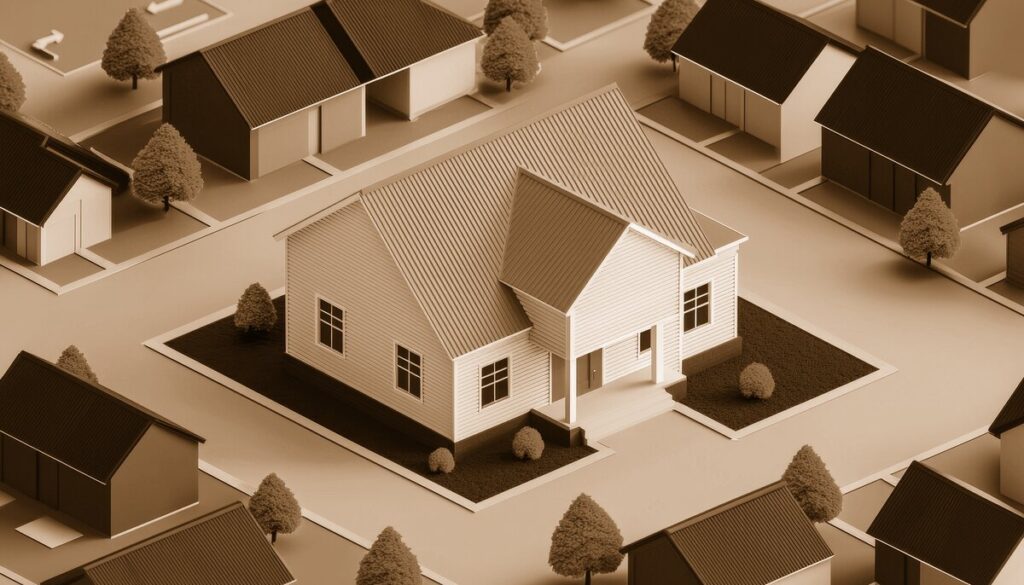
A Neighborhood Still Writing Its Story
Ellis Place is one of Greenville’s newer residential neighborhoods, but its story is connected to the much older history of Hunt County and the city that grew around cotton, railroads, commerce, and community institutions. Located along Ellis Place Drive near FM 1570, also known as Jack Finney Boulevard, the neighborhood represents a familiar Greenville pattern: open land gradually becoming homes, streets, and a gathering place for a new generation of residents.
Unlike older Greenville neighborhoods with houses dating to the early twentieth century, Ellis Place is a young subdivision. Public property records identify the community as Ellis Estates Phase 1, with homes on Ellis Place Drive beginning to appear around 2022 and 2023. The neighborhood includes modern single-family homes, landscaped yards, attached garages, and a homeowners association responsible for shared grounds and community management. ([zillow.com](https://www.zillow.com/homedetails/409-Ellis-Place-Dr-Greenville-TX-75402/450902809_zpid/?utm_source=openai))
That youth is part of what makes Ellis Place interesting. Its history is not preserved in Victorian porches or century-old storefronts. Instead, it can be seen in the way Greenville continues to grow while remaining connected to the traditions of the surrounding community.
Where the Name Comes From
The name “Ellis Place” appears to be associated with the Ellis Estates subdivision, but a definitive public record explaining precisely who or what inspired the name is not readily available. Local property and real-estate records list Ellis Place, Ellis Estates, Ellis Homestead, and Ellis View among Greenville-area neighborhood or subdivision names. ([spiazzarealty.com](https://www.spiazzarealty.com/areas/greenville/tx?utm_source=openai))
That cluster of names suggests that “Ellis” may reflect a landowner, family connection, or historic property name associated with the tract before development. In Hunt County, subdivision names often preserve the memory of former farms, ranches, surveys, or families even after the land changes use. Until a recorded plat, developer statement, or local-history source confirms the origin, the most responsible way to describe the name is as a likely reference to the property’s earlier identity rather than a proven tribute to a particular individual.
For longtime residents, that uncertainty is part of the charm. Neighborhood names frequently hold small pieces of local history that are known within families or found in courthouse records but have not yet made their way into printed histories.
Greenville’s Larger Historical Setting
To understand Ellis Place, it helps to understand Greenville itself. Hunt County was created in 1846, and Greenville developed as the county seat. The arrival of the railroad transformed the community from a small agricultural settlement into a regional center. The Missouri, Kansas and Texas Railway reached Greenville in 1880, followed by additional rail connections in the 1880s. Those rail lines opened markets for cotton and helped establish Greenville as an important commercial town. ([tshaonline.org](https://www.tshaonline.org/handbook/entries/greenville-tx-hunt-county?utm_source=openai))
Many of the city’s best-known landmarks grew out of that period of expansion:
- The Katy Depot on Lee Street was built in 1896 and remains one of Greenville’s most recognizable historic structures.
- The Hunt County Courthouse on Lee Street was completed in 1929.
- The former Greenville Post Office, completed in 1910, later became associated with Audie Murphy, who enlisted there during World War II.
- The Greenville Municipal Auditorium on Washington Street continues a long tradition of public performances and civic gatherings.
- Historic churches, including Central Christian Church and First Baptist Church, reflect the importance of congregations in Greenville’s early civic life. ([greenvilletx.gov](https://greenvilletx.gov/1106/Discoveries-for-Heritage-Travelers?utm_source=openai))
Ellis Place is several generations removed from those landmarks, but residents remain within a short drive of the streets, institutions, and public spaces that shaped Greenville.
From Open Land to New Homes
The first homes in Ellis Estates Phase 1 were completed in the early 2020s. Listings and public property information describe the neighborhood as a new-construction community near FM 1570, with convenient access to Interstate 30, shopping, schools, and major employers such as L3Harris. Homes typically feature brick or stone exteriors, modern floor plans, attached garages, patios, and lots generally measuring around one-fifth to one-third of an acre. ([zillow.com](https://www.zillow.com/homedetails/409-Ellis-Place-Dr-Greenville-TX-75402/450902809_zpid/?utm_source=openai))
The development reflects Greenville’s continuing expansion beyond its historic core. Older parts of town grew outward from the courthouse square, railroad depots, and traditional commercial streets. Today, growth follows major roads such as Wesley Street, Interstate 30, and Jack Finney Boulevard. Ellis Place belongs to this newer chapter, when families often look for larger homes, newer infrastructure, and a quieter residential setting while still wanting access to downtown and established services.
The neighborhood’s street layout also gives it a more intimate character than a large arterial road. Ellis Place Drive functions as the residential spine, with homes arranged in a compact community setting. As trees mature and residents add gardens, porches, play areas, and personal touches, the subdivision will gradually develop the visual character that older Greenville neighborhoods acquired over decades.
Nearby Streets and Institutions
Ellis Place is situated in a part of Greenville shaped by both residential growth and regional transportation. FM 1570, or Jack Finney Boulevard, links the neighborhood with other areas of the city, while Wesley Street provides a major north-south route toward downtown and Interstate 30.
Families in Ellis Place are part of the broader Greenville Independent School District community. Property listings identify schools such as Lamar or Bowie Elementary, Greenville Middle School, and Greenville High School depending on the specific address and attendance boundaries. School assignments can change, so residents should confirm current boundaries with Greenville ISD. ([redfin.com](https://www.redfin.com/TX/Greenville/405-Ellis-Place-Dr-75402/home/181677835?utm_source=openai))
Downtown Greenville remains the area’s most important historic destination. A drive toward Lee, Washington, Wesley, and Stonewall streets brings residents to the courthouse lawn, historic churches, museums, public art, and the city’s heritage walking-tour sites. The downtown area also preserves the story of Greenville’s cotton economy, early electric service, streetcars, theaters, railroads, and civic organizations. ([greenville-texas.com](https://www.greenville-texas.com/walking.htm?utm_source=openai))
A Modern Neighborhood with a Local Sense of Place
The heritage of Ellis Place is still unfolding. Its first milestones are recent: the opening of new streets, the completion of the first homes, the arrival of families, and the creation of everyday routines. Children will grow up riding bikes along Ellis Place Drive. Neighbors will meet during walks, yard projects, school events, and holiday gatherings. Small memories—moving-day conversations, first birthdays, shared tools, and familiar evening walks—will become the neighborhood’s real history.
That is how Greenville has always grown. The city’s historic landmarks may tell the most visible stories, but neighborhoods preserve the quieter ones. Ellis Place connects the newest homes in town with the larger Greenville tradition of making a place, putting down roots, and passing local identity from one generation to the next.
For now, Ellis Place is young, neat, and modern. In time, its trees will grow taller, its families will become longtime residents, and its name will gather stories of its own. That is what makes this corner of Greenville special: it is not merely a new subdivision, but the beginning of a neighborhood heritage still being written.